
Short Overview |
edit overview |
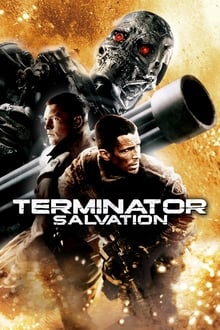
John Connor is the man fated to lead the human resistance against Skynet and its army of Terminators. But the future that Connor was raised to believe in is altered in part by the appearance of Marcus Wright. As Skynet prepares its final onslaught, they embark on an odyssey that takes them into the heart of Skynet's operations.
-
Sam Worthington
as Marcus Wright -
Christian Bale
as John Connor -
Anton Yelchin
as Kyle Reese -
Moon Bloodgood
as Blair Williams
Wiki |
edit article |
The year is 2018. Judgment Day has come and gone, leveling modern civilization. An army of Terminators roams the post-apocalyptic landscape, killing or collecting humans where they hide in the desolate cities and deserts. But small groups of survivors have organized into a Resistance, hiding in underground bunkers and striking when they can against an enemy force that vastly outnumbers them.
Production
“Terminator Salvation” was produced by Moritz Borman, Jeffrey Silver, Victor Kubicek and Derek Anderson. Peter D. Graves, Dan Lin, Jeanne Allgood, Joel B. Michaels, Mario F. Kassar and Andrew G. Vajna served as executive producers. Chantal Feghali co-produced the film and James Middleton was associate producer.
The behind-the-scenes creative team includes cinematographer Shane Hurlbut (“We Are Marshall”), production designer Martin Laing (“Pearl Harbor”), Oscar®-winning editor Conrad Buff (“Titanic”), costume designer Michael Wilkinson (“Watchmen”), Oscar®-winning visual effects supervisor Charles Gibson (“Pirates of the Caribbean: Dead Man’s Chest”), and animatronics supervisor John Rosengrant of Stan Winston Studio. The music is by four-time Oscar®-nominated composer Danny Elfman (“Milk,” “Big Fish,” “Good Will Hunting,” “Men in Black”).
Cameron’s follow-up, “Terminator 2: Judgment Day,” released in 1991, became a global box office phenomenon. The story picks up after Sarah Connor has been institutionalized and Sarah’s now-teenaged son, John Connor (Edward Furlong), must defend himself against a sophisticated T-1000 Terminator (Robert Patrick), which Skynet has sent back in time to assassinate him. But the future-Connor sends back a reprogrammed T-800 (Schwarzenegger) to protect his younger self. Together, Sarah, John and their new ally attempt to outrun the T-1000 and stop Judgment Day from happening.
Director Jonathan Mostow closed the first trilogy in 2003 with “Terminator 3: Rise of the Machines,” in which the terrible event Connor (Nick Stahl) and his mother spent their lives trying to prevent—Judgment Day—rains nuclear war across the world at Skynet’s command.
“Terminator 3” was co-written by John Brancato & Michael Ferris, who returned to the franchise to write the screenplay for “Terminator Salvation.” Brancato offers, “Since we ended the original ‘Terminator’ trilogy by destroying the world, we knew we couldn’t go back to the well of time-traveling Terminators. The new film had to be about what happens after the bombs fell.”
Early in their development process, a new vision for John Connor began to take shape. “He’s so much older and he has gone through Judgment Day,” Bale says. “Living through an event like that alters everybody, so in many ways he’s a completely different person.”
Connor fights on the front lines of the Resistance, but is not yet its leader. New developments by Skynet have rocked his vision of the future, as told to him throughout his life by his mother. She believed the future was not set, and his own doubts are growing that he may not live to initiate the events that will result in his own conception, namely, sending Kyle Reese back in time to protect his mother.
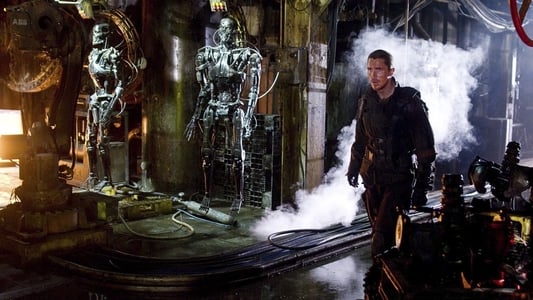
Created from drawings by production designer Martin Laing and his team of art directors, the army of machines that rampage through “Terminator Salvation” came to life under the direction of Stan Winston, the legendary creature creator who designed the original T-800. Sadly, Winston passed away during the making of this film. “Stan confided in me once that he created imaginary monsters as a child to keep him company,” McG reflects. “He said he felt like the only kid in the world who did this. Little did he know his childhood friends would come to be the heroes of millions. But most of all, Stan was a good guy who loved what he did. It was a real honor to have had the opportunity to work with Stan Winston. I intend to dedicate this film to his memory.”
John Rosengrant, an effects supervisor at Stan Winston Studio, led the 60 member team to create this generation of Terminators, and also oversaw all the special effects make-up. Winston originally hired Rosengrant to work on the first “Terminator” film and became the artist’s mentor. It was the beginning of an incredible journey, one that has seen phenomenal advancements in animatronics and special effects over the intervening years.
The practical challenge for the filmmakers of “Terminator Salvation” was to bring to life an America circa 2018 with its sun-blasted expanses, skeletal cities and both human and Terminator occupants. From finding the ideal locations and shooting facilities, to the fabrication of every physical element, to the type of film stock used to capture the otherworldly vistas he sought, McG worked in close collaboration with his team to create a unified and totally new vision for the post-apocalyptic reality of the story.
To pervade the imagery with a post-war tone, McG and his director of photography Shane Hurlbut shot the film using an experimental version of the “Oz process” in film processing. “We took an old film stock from Kodak and we let it sit in the sun too long to degrade some of its qualities,” explains McG. “Then we processed it in a way where we added more silver than you would traditionally add to a color film stock. And we went even further to manipulate that in the digital intermediate to give the film an otherworldly quality that gives you the impression that something’s just off with the way this world looks, which is in keeping with the mood of the entire picture.”
The locations would also play a major role in grounding the film in tactile reality. “We wanted a big, vast world,” McG affirms. “To do that, we needed this incredible diversity in our locations. In this film, we go to the sea, we go to the mountaintop, we go to the desert, we go to the jungle.
Added to that, we wanted to capture a world at war; the entire world is involved in this conflict, and we wanted to open the film up and make it feel like a huge cinematic experience in that respect.”