
Short Overview |
edit overview |
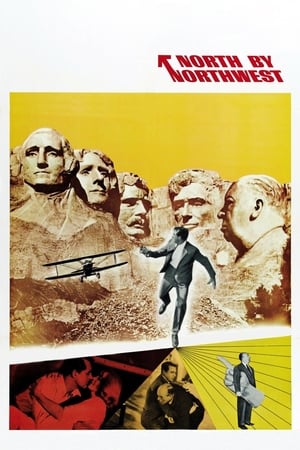
North by Northwest is one of Alfred Hitchcock’s greatest works. The master of suspense is at it again as we follow the protagonist Roger Thornhill from Manhattan to Mount Rushmore Memorial Park.
-
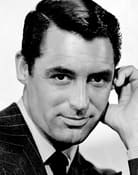
Cary Grant
as Roger O. Thornhill -
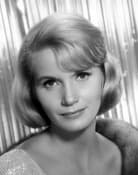
Eva Marie Saint
as Eve Kendall -
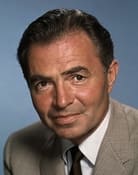
James Mason
as Phillip Vandamm -
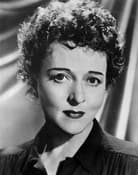
Jessie Royce Landis
as Clara Thornhill
Wiki |
edit article |
North by Northwest (1959) is a suspense film directed by Alfred Hitchcock, starring Cary Grant, Eva Marie Saint and James Mason, and featuring Leo G. Carroll and Martin Landau. The screenplay was written by Ernest Lehman, who wanted to write “the Hitchcock picture to end all Hitchcock pictures”. The film is one of several Hitchcock movies with a film score by Bernard Herrmann and features a famous title sequence by the graphic designer Saul Bass.
The movie’s world premiere took place in the San Sebastian International Film Festival. North by Northwest is a tale of mistaken identity, with an innocent man pursued across America by agents of a mysterious organization who want to stop his interference in their plans to smuggle out some microfilm (a classic MacGuffin).
North by Northwest is cited as the first film to feature kinetic typography.
Production
The filming of North by Northwest took place between August and December 1958 with the exception of a few re-takes that were shot in April 1959.
At Hitchcock’s insistence, the film was made in Paramount’s VistaVision widescreen process, making it one of the few VistaVision films made at MGM. In François Truffaut’s book-length interview, Hitchcock/Truffaut (1967), Hitchcock said that MGM wanted North by Northwest cut by 15 minutes so the running time would be under two hours. Hitchcock had his agent check his contract, learned that he had absolute control over the final cut, and refused.
MGM wanted Cyd Charisse for the role later taken by Eva Marie Saint. Hitchcock stood by his choice of Saint as she won the role.
One of Eva Marie Saint’s lines in the dining car seduction scene was redubbed. She originally said “I never make love on an empty stomach”, but it was changed in post-production to “I never discuss love on an empty stomach”. It is said that the censors felt the original version was too risqué.
The car chase scene in which Thornhill is drunkenly careening along the edge of cliffs high above the ocean, supposedly on Long Island, was actually shot on the California coast. (Long Island is devoid of precipitous seaside cliffs.)
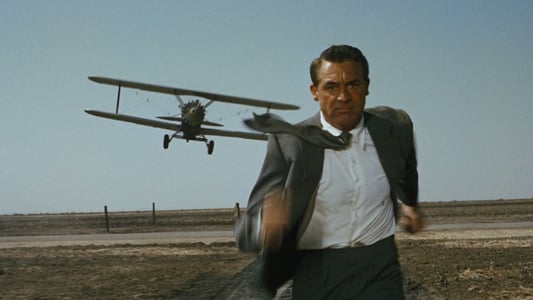
At the time, the United Nations prohibited film crews from shooting around its New York City headquarters. In an example of guerrilla filmmaking, Hitchcock used a movie camera hidden in a parked van to film Cary Grant and Adam Williams exiting their taxis and entering the building. The cropduster sequence, set in northern Indiana, was shot on location near the towns of Wasco and Delano, north of Bakersfield in Kern County, California. The plane was piloted by Bob Coe, a local cropduster from Wasco. Hitchcock placed replicas of square Indiana highway signs in the scene.
The house at the end of the film was not real. Hitchcock asked the set designers to make the set resemble a house by Frank Lloyd Wright, the most popular architect in America at the time, using the materials, form and interiors associated with him. The set was built in Culver City, where MGM was located.
This was the only Hitchcock film released by MGM. However, it is now owned by Turner Entertainment — since 1996 a division of Warner Bros. — which owns the pre-1986 MGM library.
The film’s last shot — that of the train speeding into a tunnel during a romantic assignation onboard — is a famous bit of self-conscious Freudian symbolism reflecting Hitchcock’s mischievous sense of humor.